Notes from the draw area
Corn harvest vs soybean harvest: why the front moves at different speeds
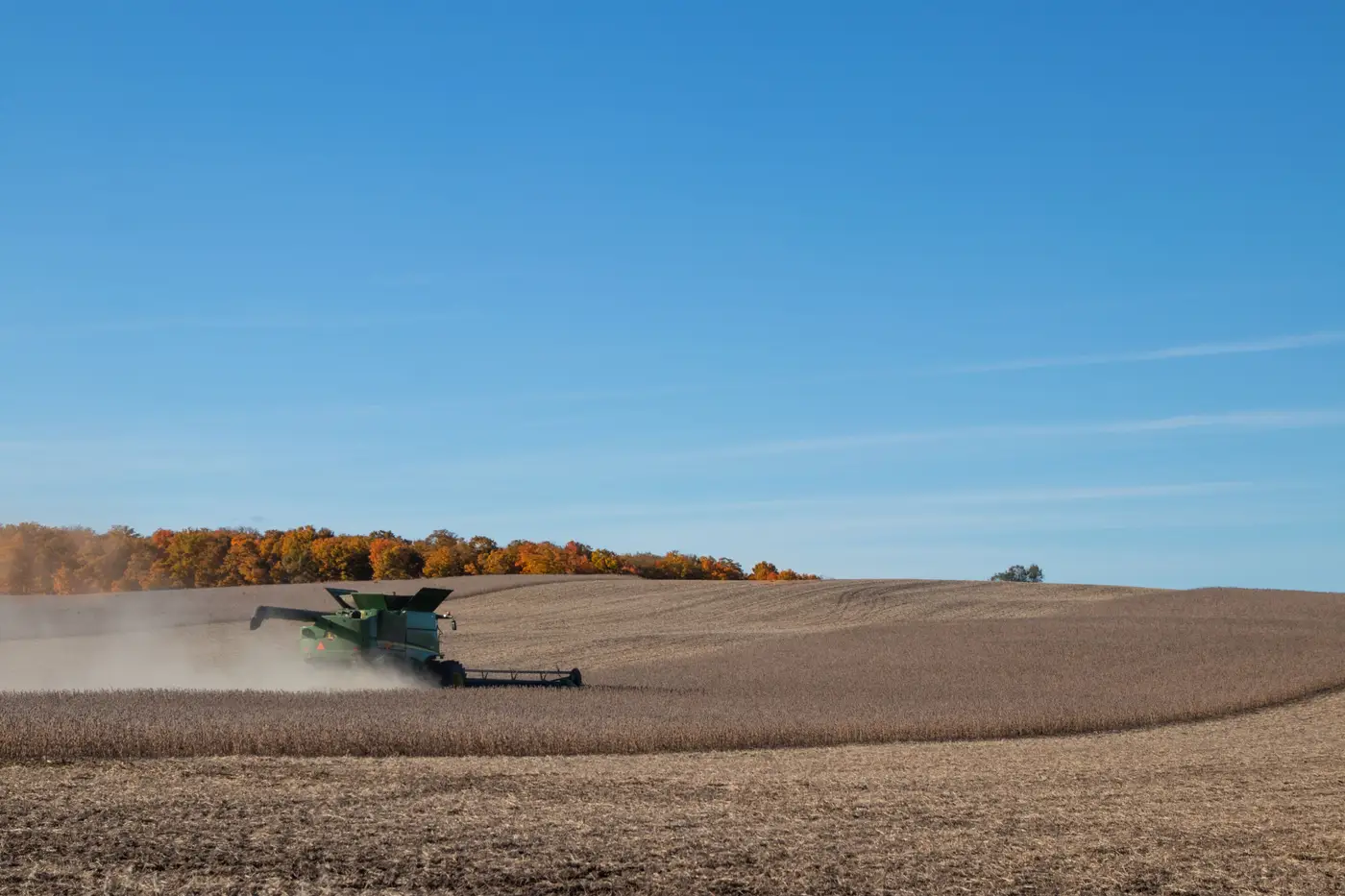
Two combines can be running the same week, in the same county, and still be telling you two different stories. A soybean front tends to move fast once it starts, sometimes clearing a township in days when conditions line up. Corn moves slower and more unevenly, because it's waiting on dry-down instead of just waiting on dry weather.
If you schedule by "harvest is underway" without separating the two crops, you'll misjudge both the truck count and the drying load. Here's what actually drives the difference.
Why soybeans move faster through a draw area
Beans are ready close to field moisture and don't need much drying once they're in that window. Growers push hard to get them in before a rain knocks pods down or shatters them at the header, so once a soybean front starts, it moves. A grower with 800 acres of beans and the right stand conditions can cut most of it in under a week if the weather holds.
That speed is exactly what makes soybean harvest hard to time from a bulletin written for the whole state. Bulletins report a percentage complete as of the survey date, which is already a few days stale by the time you read it, and a fast-moving bean front can clear 20 or 30 percentage points in that gap. By the time the number updates, the trucks are already backed up at your scale house, or you staffed for a wave that already passed.
Corn is a different animal. Combines wait on the crop to dry down in the field, sometimes cutting at 22 to 25 percent moisture and sometimes holding out closer to 18 if the forecast allows it and on-farm storage is full. That means a corn front can stall for a week on marginal drying days, then surge once two or three good drying days stack up. The front doesn't move at a steady pace. It sits, then jumps.
What that means for dryer capacity and truck scheduling
This is where the two crops put different pressure on your operation. Bean loads generally need little or no mechanical drying, so a fast bean front is mostly a truck-count and pit-space problem. Corn is a drying-capacity problem first. A corn surge after a stalled stretch can put more wet bushels on your dryers in three days than you planned for over a week, especially if several fields in the draw area all crossed the dry-down threshold at the same time.
Double-crop ground adds another wrinkle. Beans planted behind wheat run on a later, more compressed calendar than full-season beans, and that timing doesn't track the county average at all. A draw area with a meaningful share of double-crop acres can show two distinct bean waves: one from full-season fields, one from double-crop fields two or three weeks behind it. A single countywide percentage flattens both waves into one number that matches neither.
None of this is something you can call ahead by watching the sky. Field moisture reports are self-reported and patchy, and a phone call to three elevators only tells you what already arrived at those three elevators, not what's standing in the fields feeding yours.
What you want is a read on your own draw area: how much of the corn acreage has been cut versus how much is still standing and waiting on dry-down, same question for full-season beans, same question again for the double-crop ground behind wheat. That's the gap Harvest Progress is built to close, with a weekly percent-harvested layer scoped to your draw area built from satellite passes instead of a statewide bulletin or a round of calls.
Watching corn and beans as two separate fronts, not one harvest number, is the difference between staffing for the wave that's coming and reacting to the one that already hit your scale house. If that's a gap in how you're scheduling trucks and dryers this season, it's worth putting your draw area on the list.