Notes from the draw area
Double-crop vs full-season soybeans: why some draw areas get two harvest fronts a year
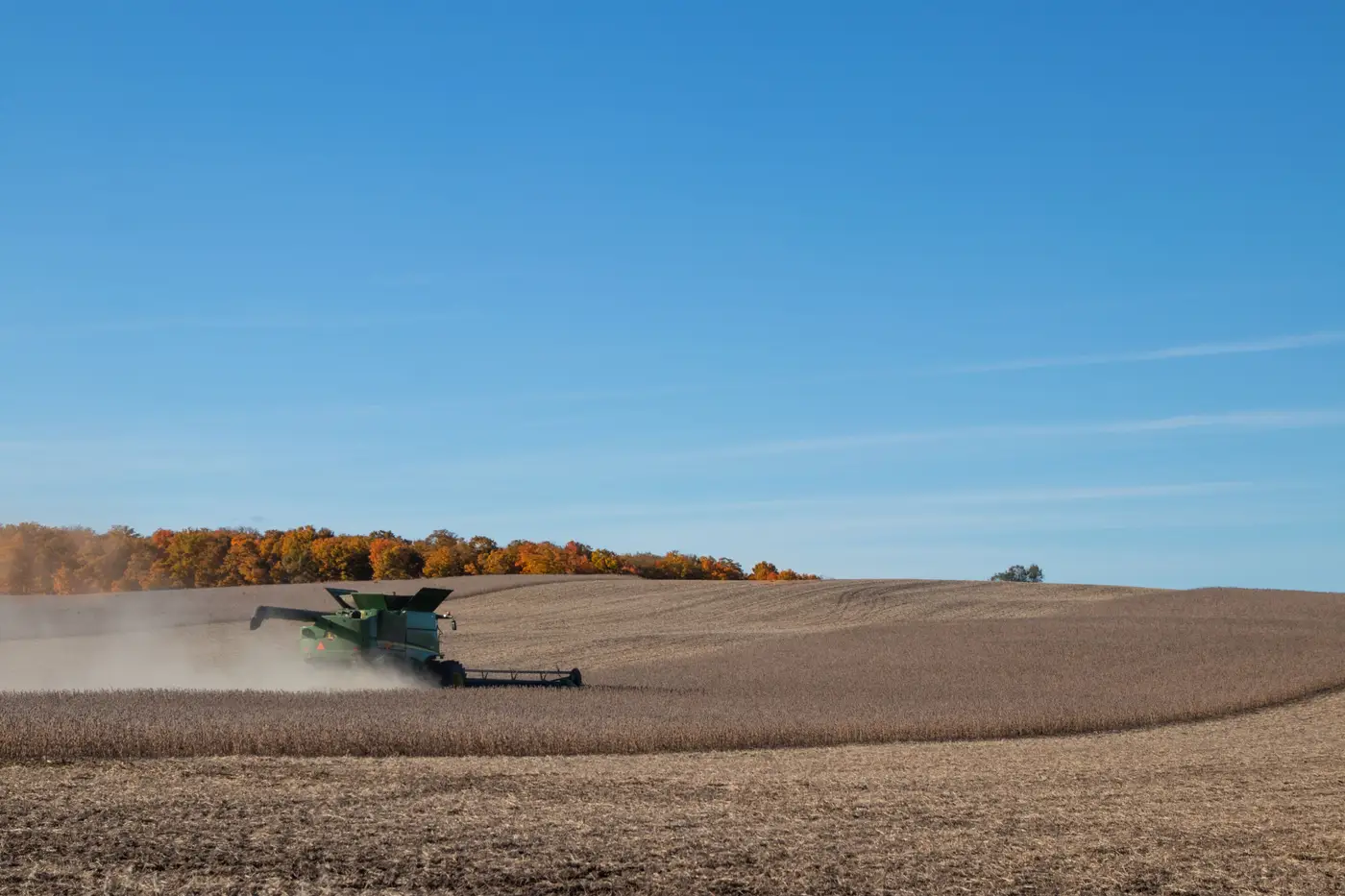
If your draw area has much wheat ground in it, you already know the bean harvest doesn't come in as one wave. It comes in two. Full-season beans, planted in May on ground that wasn't doing anything else that spring, mature and come off on a fairly predictable calendar tied to planting date and maturity group. Double-crop beans, planted into wheat stubble in late June or July after the combine cleared the wheat, run three to five weeks behind that full-season front and sometimes more if wheat harvest itself got delayed by rain.
That gap is the whole story. Two planting dates on the same crop, in the same county, produce two different maturity curves, and your scale house ends up seeing two separate waves of truck traffic instead of one long ramp. A draw area that's mostly continuous corn-soybean rotation gets a single bean front. A draw area with a meaningful wheat acreage, especially in the mid-South and lower Midwest where wheat-bean double-cropping pencils out, gets two.
Why the second front catches people off guard
The first front, full-season beans, usually tracks close enough to the state crop progress bulletin that nobody thinks twice about it. The second front doesn't. Double-crop beans were planted later, into warmer soil with less residual moisture, often with a shorter-season variety to beat frost. They flower on a compressed window, fill pods fast, and then sit at high moisture for a stretch before they're fit to combine. Weather in August and September moves that window around more than it moves the full-season window, because double-crop beans have less calendar left to absorb a delay.
The practical result: a lot of elevators get blindsided by the second front because they stopped watching closely after the first wave of beans tapered off. Drying bins that got cycled down after full-season intake have to spin back up. Truck crews that got reassigned to corn prep get pulled back to soybean intake. Basis calls made assuming the bean run was over get revisited two or three weeks later than planned.
Scheduling around two fronts instead of one
The fix isn't complicated in principle: track the wheat-ground beans separately from the rest of your draw area. In practice that means knowing roughly what share of your draw area went to double-crop beans this year, when wheat harvest wrapped up locally, and then watching for the second cut to start moving through those specific townships rather than assuming the whole area is done once the bulletin shows beans "mostly harvested" statewide.
State crop progress reports blend full-season and double-crop acreage into one percentage, which is close to useless for this. A county that's 60% harvested on the state sheet could mean the full-season ground is basically done and the double-crop ground hasn't started, or it could mean something else entirely. You can't tell from the number alone, and the bulletin isn't built to tell you.
What actually helps is a view scoped to your draw area that shows the cut moving field by field, updated often enough to catch a second front starting while your drying capacity and truck schedule are still set up for the first one. That's the gap Harvest Progress is built to close: a weekly read on how far the harvested-area front has moved across your specific draw area, built from satellite passes rather than a county-level average, so you can see the double-crop beans starting to come off before they're already stacking up at the scale house.
Wheat-to-soybean double crop ground isn't going anywhere in a draw area where it pencils out, and the two-front pattern repeats every year it does. Knowing which part of your draw area is on the first front and which is still waiting on the second is the difference between scheduling trucks and drying capacity ahead of the run, or finding out about it when the trucks are already in line.
If two harvest fronts a year is just how your draw area works, it helps to watch them as two fronts instead of one blended number.