Notes from the draw area
Field notes: the afternoon every truck in the county shows up at once
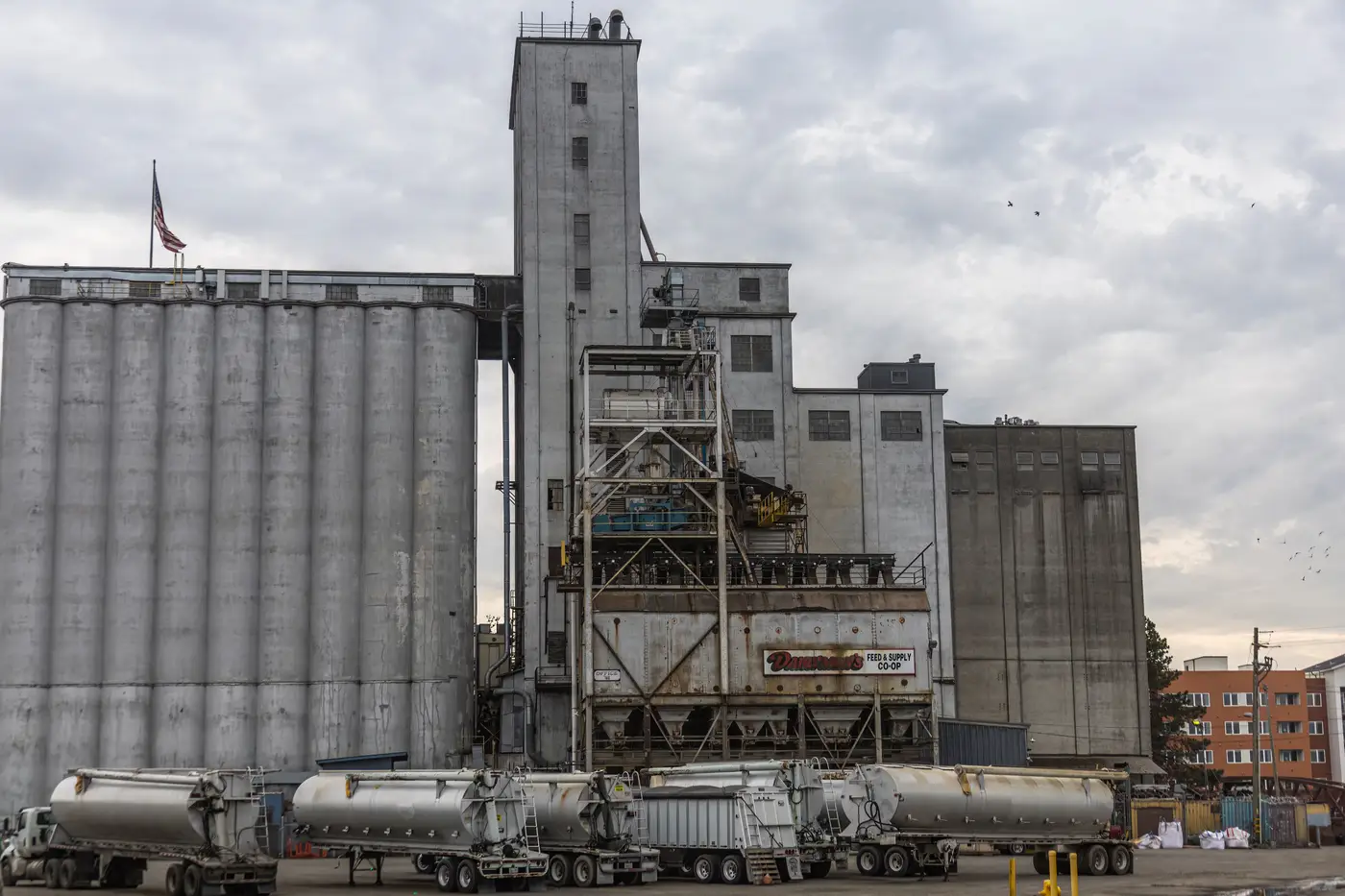
You know the afternoon. The line backs past the scale house, past the office, out onto the shoulder of the county road, and somebody's idling combine trailer is blocking the turn lane for the third year running. The pit is full. The leg is running flat out. Somebody in the office is on the phone with three farmers at once, telling each of them the same thing: forty-five minutes, maybe an hour.
What looks like chaos is physics running on a calendar.
Grain doesn't dry down field by field in isolation. A stretch of clear, breezy days pulls moisture out of standing corn or soybeans across a whole stretch of country at roughly the same rate, because the weather doing the drying doesn't care about property lines. So when the moisture finally drops under the number a grower's been waiting on, it tends to drop under that number on a lot of farms within a day or two of each other. Add a rain system sitting on the horizon, and every operator in the draw area makes the same call at once: cut now, before the window closes. Nobody's coordinating. They're all just reading the same sky.
The elevator ends up on the receiving end of a decision that got made independently, a dozen times over, by people who had no way of knowing the others were making it too.
What's strange is how visible the lead-up is, if you're looking in the right direction. A week before that afternoon, you can usually see combines starting to roll in the fields closest to town, the ones that dry out first because of soil type or slope or just which direction the wind's been coming from. The front moves. It doesn't jump. By the time it reaches the far edge of the draw area, the fields near the elevator are already done, and the ones that'll show up Thursday afternoon are the ones still standing right now.
That's the part that doesn't come through in a phone call. An elevator manager who rings around Tuesday morning gets a snapshot of whoever happens to pick up, not a read on how far the cutting has spread. A county-wide crop progress bulletin tells you the state is at sixty percent harvested, which is true and useless, since it's an average of a hundred draw areas that aren't on the same clock. Neither one tells you that the front is three-quarters of the way across your specific pull radius and closing fast on the last dry quarter sections.
That's the gap a harvest-front view is built to close: watching the cut line move across your own draw area, satellite pass to satellite pass, so the Thursday-afternoon pileup stops being a surprise and starts being something you saw coming from Monday.
None of this puts the trucks on a more civilized schedule. Grain still comes off when it's ready, and growers are still going to cut when the window's open rather than wait for it to suit the scale house. But there's a difference between getting run over by that afternoon and knowing it's coming three days out, calling in a second scale operator, freeing up another drying bin, telling the night crew they're staying late. The weather's going to do what it does. The only thing you actually control is how surprised you are by it.
If you're tired of that surprise, Harvest Progress is built to show you how far the cutting has moved across your own ground before it shows up at your gate.