Notes from the draw area
Sizing temporary storage before an early harvest hits
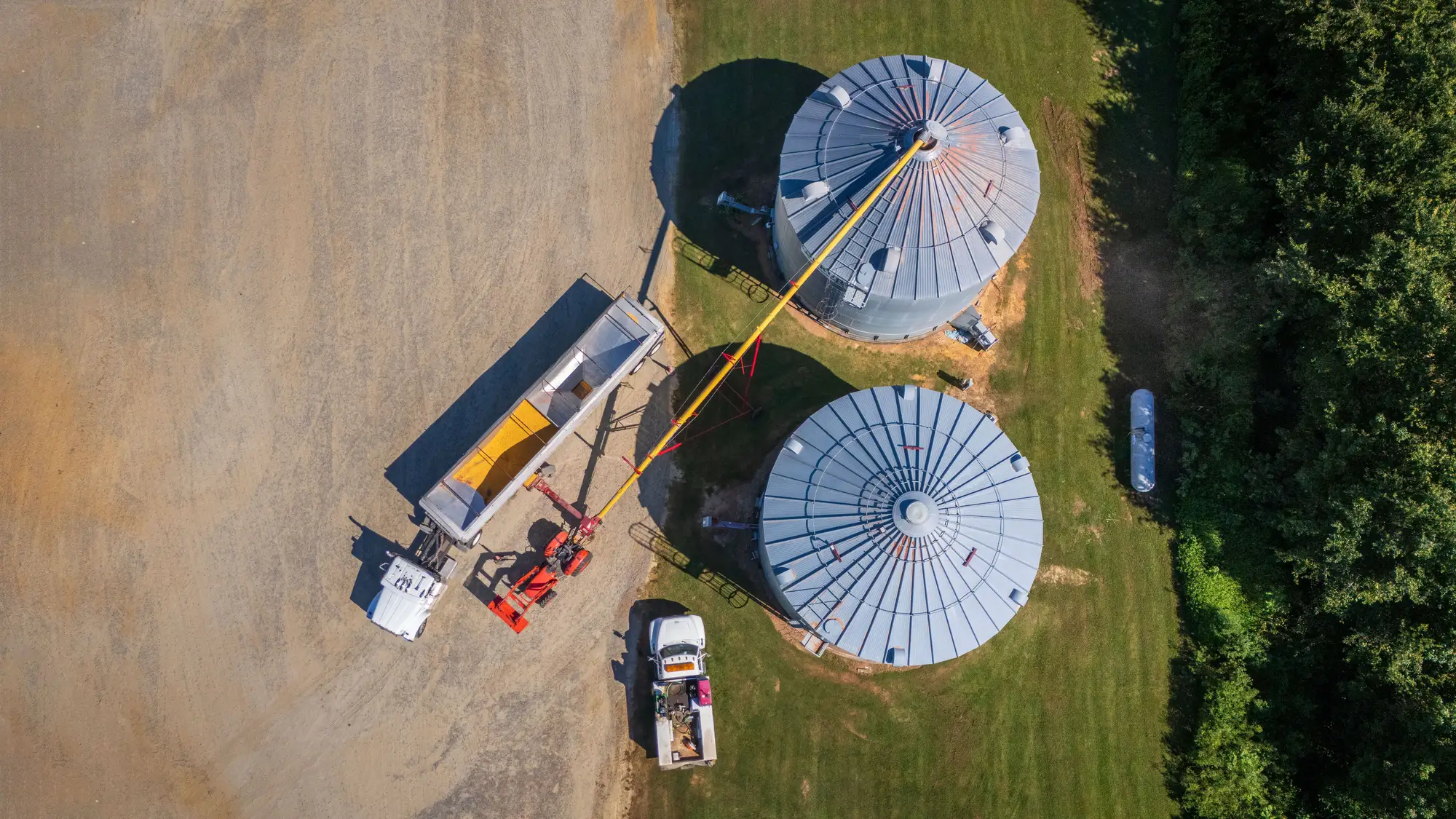
An early harvest doesn't give you the two or three extra weeks you'd normally use to firm up bin space, line up a pile permit, or get bags ordered. If the crop is cutting ten days ahead of normal, your overflow math needs to happen now, not after the first truck gets turned away at the scale house.
Working out how much overflow you need
Start with what your permanent storage can hold once you subtract working headspace, blend space for off-grade loads, and whatever carryover is still sitting in the bottom of a bin from last year. Most elevators run that number tighter than the nameplate capacity suggests. Then look at your draw area's planted acres and a realistic yield estimate, and you've got your total expected intake.
Subtract one from the other and you've got your overflow number in bushels. Timing matters more than the math itself. If 60% of your draw area's corn comes off in a ten-day window because an early frost pushed everyone's combines out at once, that overflow capacity needs to be standing and ready before day one of that window, not day six when the yard's already stacking trucks.
This is where phoning around to five neighboring elevators for a read on how fast the cut is moving stops being a once-a-week chore and turns into something you're doing daily, because an early harvest compresses the whole season into a shorter, harder push.
Grain bags vs ground piles for emergency capacity
Both get you through an overflow situation. The choice comes down to how fast you need capacity up, what equipment you've already got, and how long the grain needs to sit.
Grain bags go up fast. A bagger crew can fill several bags in a day once grain starts moving, and you don't need a permit or a pad in most jurisdictions the way you do for a ground pile. Moisture management is the tradeoff. Bagged grain doesn't aerate itself, so anything going in above 15-16% moisture is a bet on cool fall weather holding, and you need an extraction plan before you load the first bag, not after it's full.
Ground piles hold more bushels per dollar of setup once the pad, tarp, and aeration ducting are in place, and they're the better call if you expect the overflow to sit for months rather than weeks. But building one properly, with a compacted base and fan ducting laid before the first load goes down, takes days you may not have if the front is already moving across your acres.
A lot of elevators run both: bags for the first few days of overflow while a ground pile gets built behind them, then shift new loads to the pile once it's ready to receive grain.
Where overflow planning breaks down
Overflow planning usually fails because of timing, not a bad bushel estimate. Crews find out the crop came off faster than planned once trucks are already lining up and the bags or the pad aren't ready.
Elevator overflow planning works when you know where the harvested-area front actually is across your draw area. A state crop progress bulletin averages conditions across the whole state, and the last elevator you called only saw what came across their own scale that morning.
That's the gap a weekly read on how far cutting has moved across your specific draw area is built to close, so you're staging bags or breaking ground on a pile a few days ahead of the trucks instead of reacting once they're already at the gate.
If you're trying to time storage decisions against a harvest that's running ahead of schedule, Harvest Progress is built for exactly that call.