Notes from the draw area
Unit train loading vs daily truck receiving: balancing both at harvest
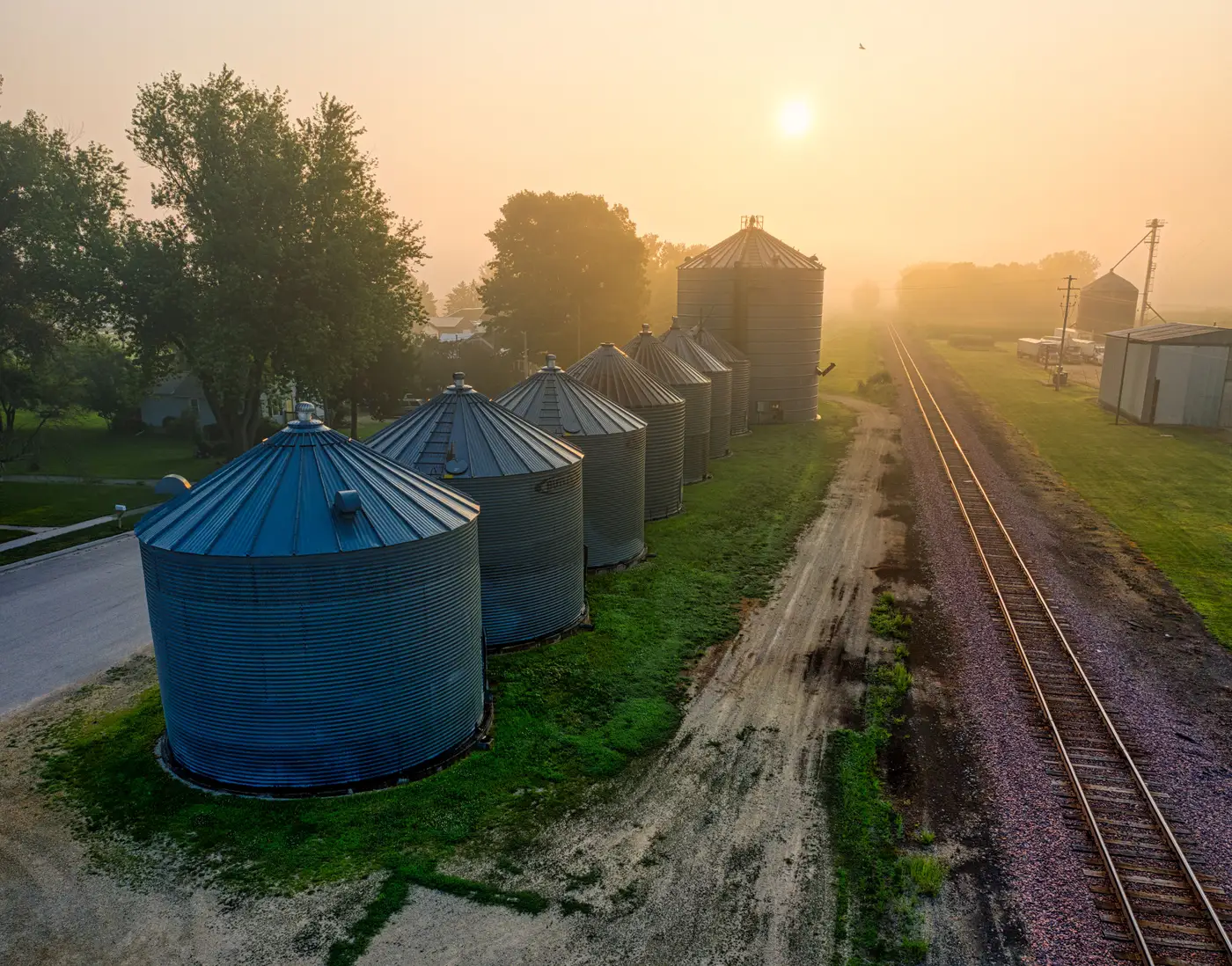
A shuttle train doesn't care that it rained for two days in the south end of your draw area. It shows up on its spot, usually with a loading window measured in hours, and the elevator either has 110 cars of grain ready to move or it's paying demurrage while the railroad waits. Meanwhile the truck line outside the scale house runs on an entirely different clock: farmer schedule, combine capacity, moisture, whatever the sky is doing that morning. Getting both to work off the same bins in the same week is most of what harvest logistics is.
Why the two schedules fight each other
Rail is committed well before harvest starts. The shuttle facility books its loading slots with the railroad months out, and a missed spot doesn't just cost you a bad day, it can push your next window back and stack up penalties. That commitment is fixed. Truck receiving is the opposite of fixed. Some days the probe line is backed up past the highway and you're turning trucks away at dusk. Other days, usually right after a hard rain or a cold snap that stalls cutting, the yard is empty and the dryers are sitting idle.
The elevator manager's problem is that unit trains want a steady, predictable fill rate and truck receiving delivers grain in bursts tied to field conditions nobody in the office controls directly. Load the train too early into a slow receiving week and you're scraping bins you wanted held back for blending. Wait too long hoping trucks catch up and you're loading cars in the dark the night before the spot, running extra shifts to make it.
How elevators smooth it out
Most facilities handle this with a few overlapping moves rather than one clever trick.
Segregated storage helps first. Keeping a dedicated set of bins earmarked for rail fill, separate from the working bins that absorb daily truck volume, means a slow receiving day doesn't eat into train grain, and a heavy day doesn't force you to load cars you weren't planning to touch yet.
Basis is the other lever. Pulling basis in a couple cents on a day you know receiving will be light, then easing it back out once the yard is already full, nudges farmer and cutter delivery timing without anyone picking up a phone. It's a blunt tool and it costs money, but it's faster than hoping the weather cooperates.
The third piece is knowing where the harvest front sits across your draw area before the trucks arrive. A county-wide crop progress number doesn't tell you much when your draw area spans three different soil types and your southeast townships always cut two weeks behind the rest. Elevators that track progress at that finer grain can see a surge coming a few days out and shift the train loading schedule, staffing, and drying capacity to meet it instead of reacting once the line is already backed up at the scale house. That's the gap a weekly read on how far the cut has moved across your specific draw area is built to close, rather than a statewide bulletin written for a different audience entirely.
Drying capacity ties the two schedules together in a way that's easy to underweight. Wet grain coming in fast can't go straight to rail cars without drying first, so a truck surge doesn't automatically translate into train-ready bushels on the same day. Planning dryer runtime against both the expected truck volume and the committed loading window, not just one or the other, is what keeps a good receiving day from turning into a bottleneck two days later.
What separates the elevators that handle it well
None of this makes the two schedules stop competing for the same bins. It just means the competition gets managed ahead of time instead of handled as a crisis at the scale house. The elevators that handle it best know earlier which part of the draw area is about to start moving grain, and they build the rail and truck schedule around that instead of around last year's average or a bulletin written for the whole state.
If you're tired of piecing that picture together from phone calls to cooperative agronomists and a statewide bulletin, that's exactly what Harvest Progress maps for your draw area, updated weekly through the season.