Notes from the draw area
What is elevator shrink, and why it matters at intake
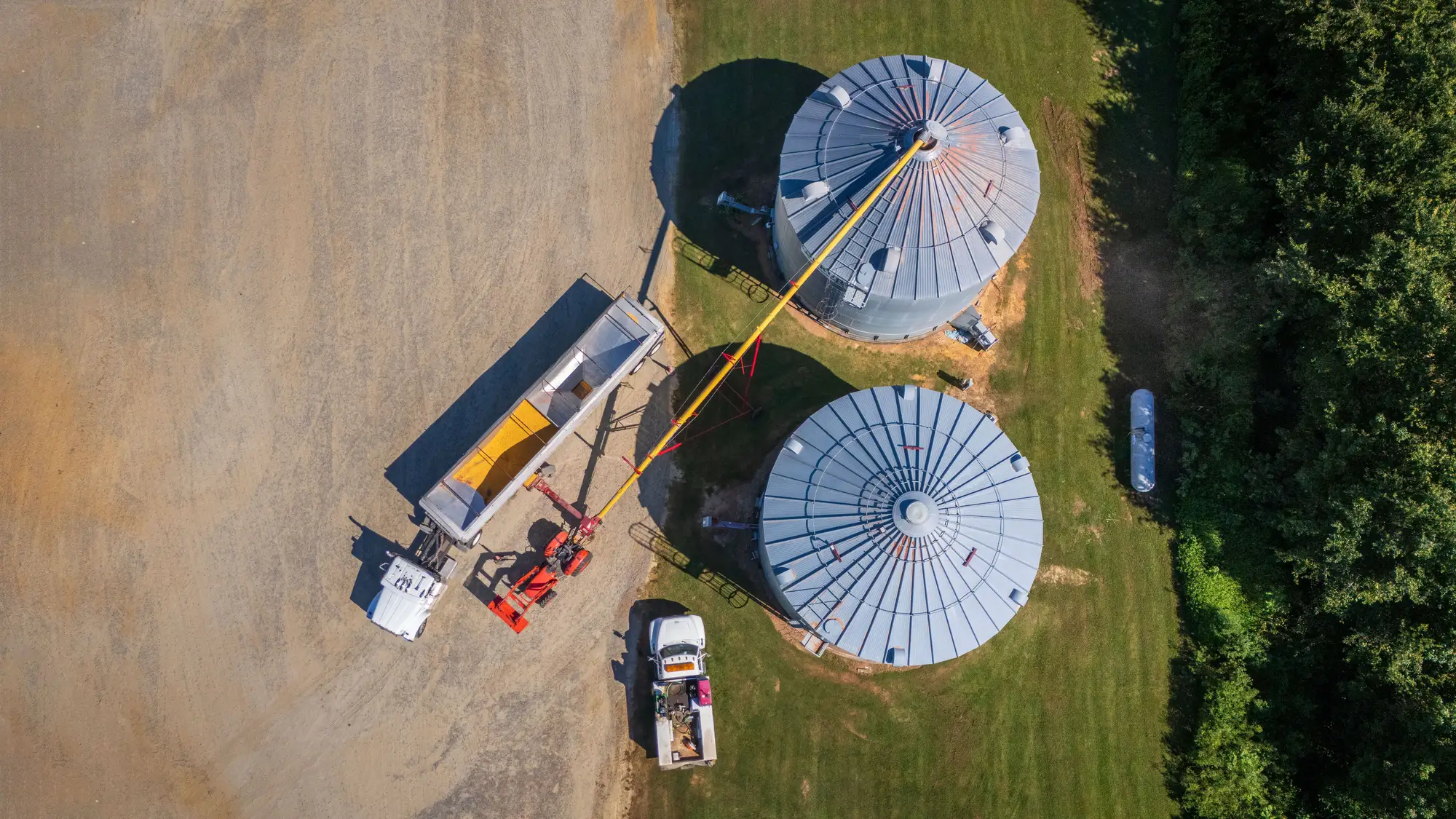
Shrink is the gap between what a truck weighs over the scale and what the elevator can sell or store off that same load. A farmer delivers wet corn at 22% moisture, the ticket says one weight, and the bushels that land in the bin at 15% are fewer than the bushels that rolled in. That gap is physics and handling loss, and every merchandiser who's settled a scale ticket knows it has to be accounted for before anyone talks price.
At intake, shrink shows up twice. First as moisture shrink, the water that leaves the grain between the field and the standard moisture the elevator books against. Second as handling shrink, the small mechanical loss from augers, legs, and dryers moving grain through the system. Both get folded into a shrink factor applied to every load, and that factor is what turns gross scale weight into net bushels the elevator can actually merchandise.
How the shrink factor gets calculated
The moisture piece follows a standard formula used across the trade:
Shrink % = ((moisture content − base moisture) / (100 − base moisture)) × 100
Say corn comes in at 20% moisture and the base is 15%. The math works out to roughly 5.9% shrink on that load. Push the moisture to 25% and the shrink climbs past 11%. It isn't a straight-line relationship, which is exactly why a quick mental shortcut gets merchandisers in trouble on a wet year.
Handling shrink gets added on top, usually as a flat percentage set by company policy rather than measured load by load, since it covers the physical loss of moving grain through the dump pit, legs, and dryer rather than moisture leaving the kernel. Add the two together and you get the total shrink factor the elevator applies at the scale ticket, which is the number that determines settlement.
Why it matters before the truck ever shows up
None of this is new accounting. What changes year to year is the volume and moisture profile hitting the scale house on any given day, and that's where shrink stops being a back-office calculation and starts being an operations problem. A string of loads coming in heavy and wet pulls down bin capacity faster than the same bushels at a drier moisture, because wet grain needs dryer time an elevator manager has to schedule in advance, not invent on the fly. A trader quoting basis off a day's intake needs to know whether that intake was mostly tough grain running high shrink or dry grain that settled clean, because the two scenarios mean different things for how much usable bushel landed.
The problem most elevators run into isn't the shrink formula itself. It's not knowing, hour by hour, how much of the draw area is cut and how wet that grain is likely to be before it's sitting at the scale. State crop progress bulletins cover a whole state on a weekly lag. Phoning around to competing elevators for a read on local conditions works, barely, and it's the kind of work nobody wants to be doing at six in the morning before the first truck arrives.
That's the gap a weekly, region-specific view of the harvest front is built to close. A map of how far the cut has moved across your own draw area gives a logistics manager a way to see the wave of grain coming before it hits the scale, so drying capacity, truck scheduling, and basis calls can get set ahead of the rush instead of reacted to after it.
Shrink will always be part of the settlement math. The harder problem, knowing what's about to come through the gate and how wet it's going to be, is the one worth solving ahead of intake rather than during it. If that's the gap keeping you on the phone every morning, take a look at what Harvest Progress tracks for your draw area.